Civ VII Beginner Guide: From Turn 1 to the First Age
Civ VII replaces the traditional single marathon with a three-Age structure, and for a newcomer the single biggest question is simply "what do I click first?". The early game rewards calm, purposeful growth far more than early aggression, and a steady opening pays off for the entire match. This guide lays out a safe, order-by-order plan that keeps your economy stable while you learn the systems.
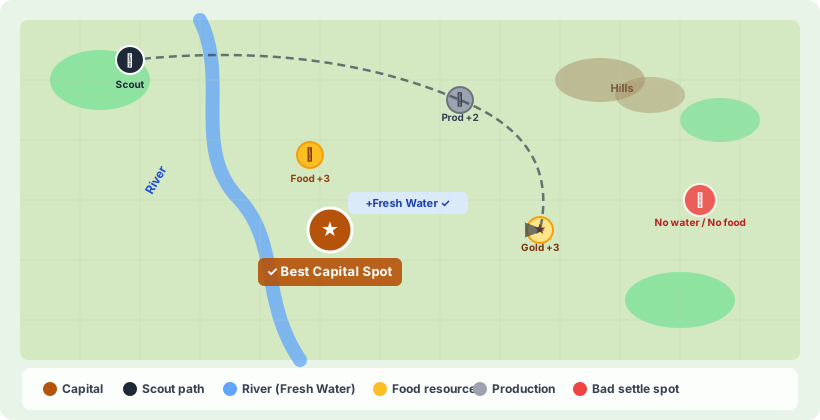
1. First 10 turns: scout and settle
Send a scout outward immediately to mark resources and settle spots, with a settler following a few tiles behind. Look for fertile + resource + near-water tiles, because they give you better growth and production later. Do not waste the scout fighting; its real job is gathering information.
- Settle your first city near a river or coast for the fresh-water food bonus.
- Avoid fighting independent powers early; gift them gold to stay friendly instead.
- Use scouts to reveal terrain, not to chase kills.
- Open tech with Animal Husbandry then Mining to unlock key tile improvements.
- Keep the settler screened by a warrior so barbarians cannot snipe it.
- Claim a luxury resource early to boost amenities across the empire.
2. Stable growth: food and production first
Districts in Civ VII rely on adjacency bonuses, so placement matters as much as what you build. New players should develop food and production tiles first to keep cities fed and building. A city that starves stops growing and stops producing, which snowballs into a lost game before you notice.
- Order your first three builders: food tiles (growth) then production tiles (speed) then luxury tiles (amenities).
- Once a city hits population 3, place its first district — a Campus or Commercial Hub.
- Keep 2-3 builders rotating per city so improved tiles never sit idle.
- Never let a city drop below 0 amenities; unrest cuts every yield you make.
3. Before the Exploration Age
The transition between Ages is the most important planning moment in the game. What you bank now determines how fast your new-era cities come online, and how painful the Age Crisis becomes.
- Complete at least two Legacy Paths this Age to soften the Age Crisis.
- Plan your leader plus next civ pairing early (see the leader pairing guide).
- Bank at least 300 gold so your first city expands fast after the transition.
- Get the capital above population 5 to immediately build a new-era district.
- Secure 1-2 alliances for diplomatic cover during overseas expansion.
4. Common beginner mistakes
Most early losses come from a handful of repeated errors rather than bad luck. Recognizing them early saves dozens of wasted turns.
- Declaring war too early: ancient military investment pays poorly; focus on internal development first.
- Spreading cities too far: distant cities cannot support each other and get picked off; keep them 4-6 tiles apart.
- Ignoring happiness: unrest craters output; check amenities the moment a city is founded.
- Placing districts blind: always read the adjacency preview before committing a tile.
- Hoarding gold: gold is a transition tool; spend it on builders and settlers, not let it sit.
5. What comes next
Once you are comfortable with the opening, pick a victory path and study its dedicated guide. The fundamentals here — scouting, settling well, banking for transitions — apply to every single route.
Follow this cadence and you will enter the next Age with a stable economy and a real foundation for any victory path you choose.
6. Reading the map at a glance
Before every major decision, glance at the minimap for three signals: where barbs are spawning, where rivals are settling, and where unclaimed luxury resources sit. Acting on those three reads prevents most early disasters and keeps your plan on track without micromanagement.
- Barbarian scouts heading home mark a camp; clear it before it snowballs.
- A rival settling near your border is a future war; contest the tile now.
- Unclaimed luxuries are free amenities — grab them with a quick settler.