The Age System Explained: Transitioning Across Three Ages
The biggest structural change in Civ VII is splitting a game into three Ages, and understanding this system is the foundation of the whole match. Each Age has its own victory progress and its own Age Crisis. The Age system dictates your pacing, your crisis response, and your final sprint timing more than any single unit or wonder does.
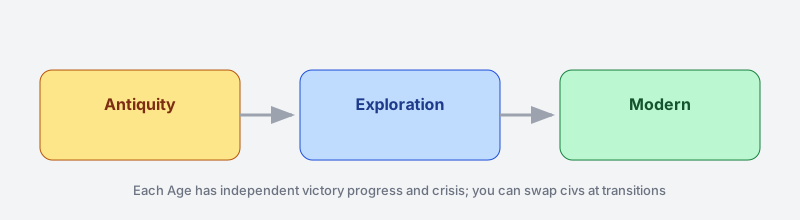
Antiquity: lay the foundation
The goal of the opening Age is to found your first cities, unlock base techs and civics, and set up expansion. Keep your internal economy smooth and avoid overreaching, because everything later builds on this base.
- Scout the surroundings early to lock down resources and city-state positions.
- Found 3-5 cities, each with a basic district (Campus, Commercial Hub, or Theater).
- Complete at least two Legacy Paths so the transition to Exploration is calm.
- Do not start wars unprovoked; prioritize internal growth and diplomacy.
- Build a few wonders that give era-long bonuses rather than one-shot powers.
Exploration: push outward
The focus shifts to naval exploration, distant settlements, and contesting the new world. Gold and relationships banked here directly shape your Modern start, so treat this Age as an investment phase.
- Build a navy and explore the new continent to plant colonial cities.
- Overseas resource yields are doubled — prioritize luxury and strategic resources.
- Attend the first World Congress and push adopted proposals for diplomatic support.
- Expand your alliance web to pave the way for a diplomatic or economic win later.
- Keep a defensive fleet at home so distant wars do not bleed your core.
Modern: decide the game
All five victory types — Science, Culture, Economic, Military, Religion — converge here, and whoever fills the bar first wins. This is the sprint, not the marathon.
- Pick your final sprint route based on the two Ages of buildup behind you.
- Concentrate all production and resources on the victory project.
- Use modern units (tanks, planes, fleets) to suppress rivals if needed.
- Diplomatic or economic routes can lock the game via the UN wonder and gold diplomacy.
Age Crisis and Legacy Paths
At the end of each Age an Age Crisis erupts. Its intensity depends on how many Legacy Paths you finished in the prior Age. There are four paths — Science, Culture, Military, Economic — and the more you complete, the gentler the crisis becomes.
Golden vs Dark Age
Finishing 3-4 Legacy Paths grants a Golden Age with an opening bonus next Age; finishing 0-1 triggers a Dark Age with an opening penalty. Golden bonuses snowball, while Dark Ages cost you a whole new Age to recover, so planning Legacy Path completion is the core strategy of the system.
Planning across Ages
The best players think two Ages ahead. Decide in Antiquity which Legacy Paths you will finish, and let that choice shape every district and wonder you build in Exploration.
Legacy Path checklist by Age
To avoid a Dark Age, track the four Legacy Paths as a checklist rather than a vibe. At the end of each Age, count how many you completed and adjust the next Age's build order accordingly.
- Science: finish key techs and build a tier-2 science building.
- Culture: complete civics and place a high-adjacency Theater Square.
- Military: win a declared war or clear multiple independent powers.
- Economic: control a unique resource or run a set number of trade routes.
- Two completed paths is the floor; three or four is the target for a Golden Age.
Players who treat Legacy Paths as a scoreboard almost never suffer a punishing crisis, because they always see the shortfall a full Age before it matters.